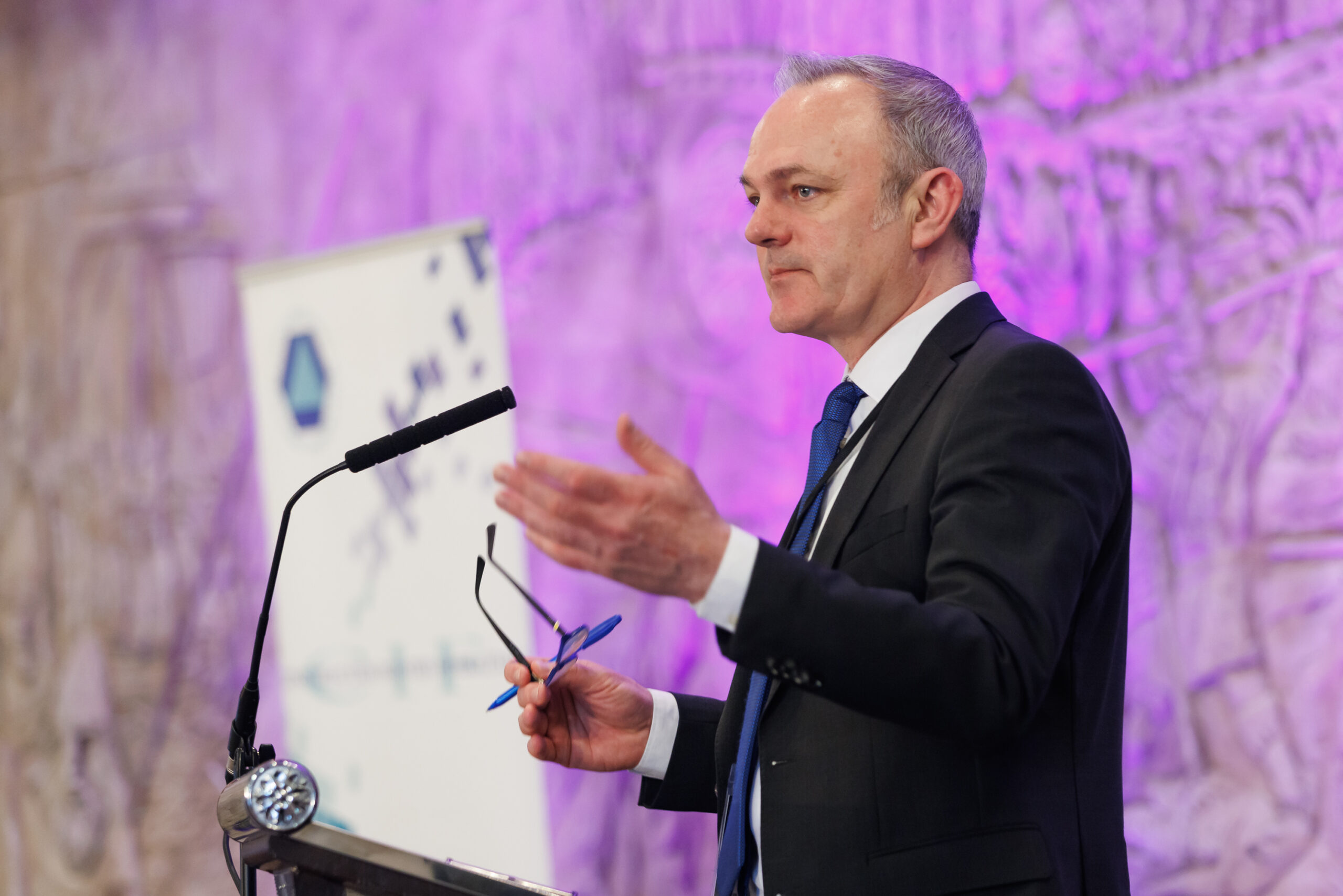
Pictured above is CIF Director of Housing, Planning & Development Conor O’Connell
Residential construction operates within fixed-price realities says Conor O’Connell, CIF Director of Housing, Planning & Development. He considers the need for greater stability, transparency and predictability in construction input costs during active project delivery periods
As this year’s CIF Top 50 Contractors edition highlights, Ireland’s construction sector continues to demonstrate remarkable resilience, adaptability and ambition in the face of ongoing economic and geopolitical uncertainty.
The companies featured are delivering homes, infrastructure and investment at a scale that is critically important to Ireland’s future growth and development. However, recent weeks have again
highlighted a growing challenge for the sector, the speed and scale of construction cost increases being passed through the supply chain.
The Construction Industry Federation acknowledges the challenges and uncertainty currently facing global supply chains and international markets.
However, the recent pace and scale of cost increase notifications issued to builders following geopolitical developments has prompted concern across the industry, particularly regarding the need for greater stability, transparency and predictability in construction input costs during active project delivery periods.
Residential construction operates within fixed-price realities. When a homebuilder sells a house to a first-time buyer, entersinto an agreement with a local authority, or signs contracts for cost rental and apartment delivery, those prices are largely locked in for the duration of the build. In many cases, projects can take months or years to complete, with builders carrying the responsibility of delivering at the originally agreed cost.
That is why price stability and certainty across the supply chain are critically important. The industry recognises that suppliers themselves face pressures and volatility.
Construction is an ecosystem, and every part of that ecosystem plays a vital role in delivering the homes and infrastructure Ireland urgently needs. But the burden of sudden increases cannot fall solely on builders at the point of delivery.
If risk is shared more evenly across the sector, then the overall system becomes stronger and more sustainable. Incremental pressures absorbed collaboratively across the supply chain are far less damaging than abrupt increases concentrated at one point in the delivery process.
There is also a legitimate question as to whether the industry now needs to reexamine how contractual relationships are structured between builders and suppliers, particularly around pricing certainty during active construction periods.
Stability and predictability are essential if the sector is to continue delivering at the scale required. The concern is not simply commercial. Ireland has an urgent housing need, and maintaining momentum in housing delivery must remain a national priority.
The sector cannot afford interruptions to investment, confidence or delivery capacity at a time when demand for housing remains exceptionally strong.
Despite the challenges, builders remain committed to delivering homes and infrastructure throughout the country. But that commitment requires collaboration across the entire construction ecosystem, from policymakers and financiers to contractors, suppliers and manufacturers.
We must continue building. We must continue investing in housing and enabling infrastructure. And everyone involved in the delivery process must play their part in ensuring the stability needed to meet Ireland’s long-term societal and economic needs.