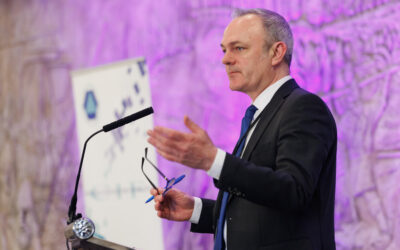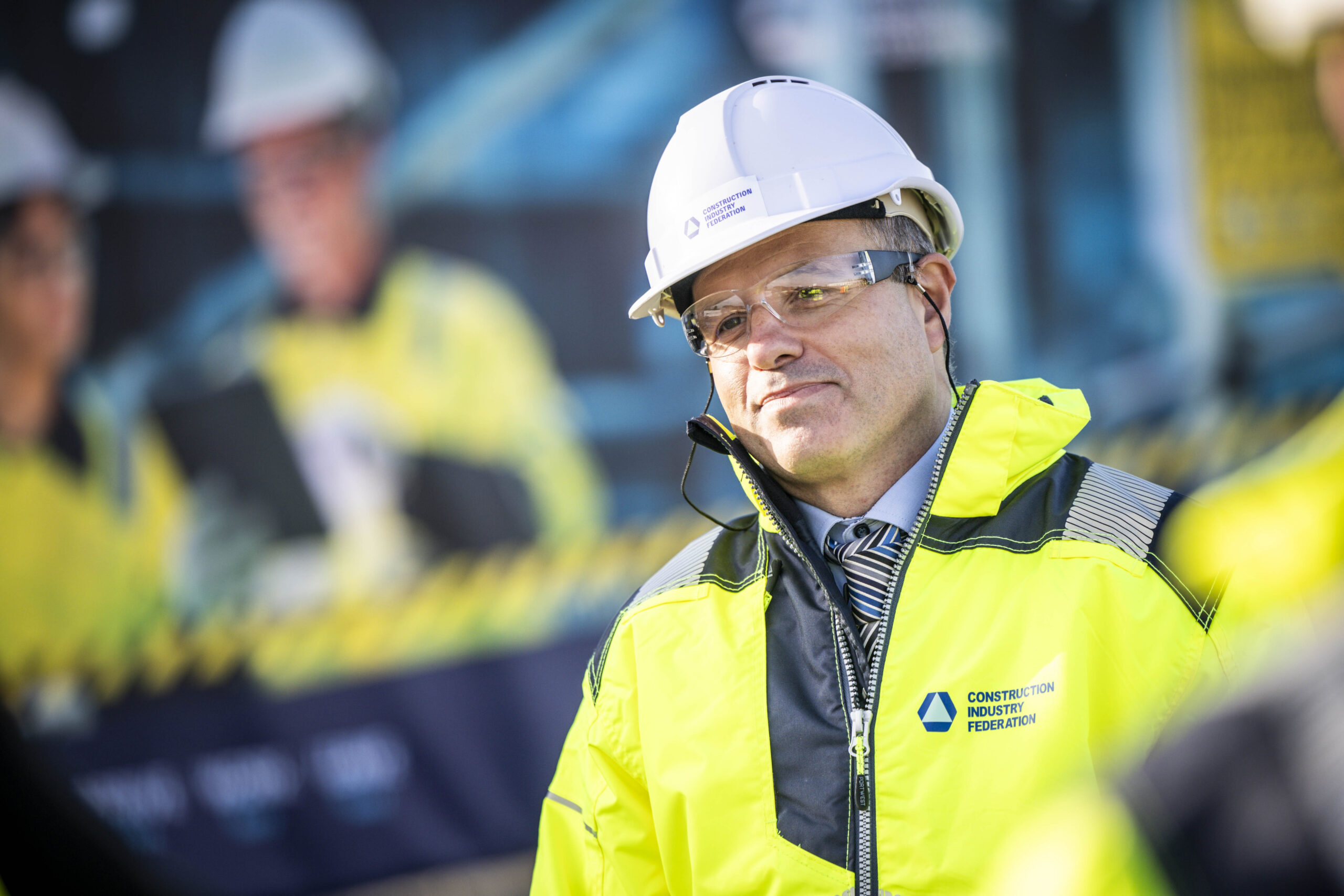
Construction Industry Federation CEO Andrew Brownlee outlines pathways and priorities to navigating Ireland’s housing delivery pressures
Housing remains the defining national priority for Ireland, and this edition of Construction focuses squarely on that challenge. The scale of what must be achieved is immense.
The Government’s new housing strategy, Delivering Homes, Building Communities, launched last November, sets out the ambition to deliver 300,000 homes by the end of 2030.
It is a plan that recognises both the urgency of supply and the need to build sustainable, well-serviced communities. Last year, we saw a welcome increase in the number of units delivered. However, the real concern now lies beyond the immediate horizon – particularly for 2027 and 2028.
While revised housing guidelines issued last July were an important step, builders across the country are warning that they are rapidly running out of opportunities to apply for planning permissions due to the lack of zoned land.
There is still a significant shortfall in the amount of zoned residential land in Ireland. Local authorities were tasked last July with increasing the quantum of land zoned for housing, yet progress has been slow. In some cases, the proposed zoning variations simply do not go far enough to meet Ireland’s future population and housing needs.
We are urging local authorities to conclude this process in the weeks and months ahead, so that land can be activated, planning applications can proceed, and more homes can ultimately be built. The implementation of commitments under Accelerating Infrastructure will also be crucial in enabling the industry to deliver homes at the scale required, with utilities, such as water, central to opening up land for housebuilding.
At the same time, our Q1 2026 Construction Outlook Survey highlights a new and serious challenge emerging for the wider industry. The surge in global oil prices following the outbreak of war in Iran is creating renewed volatility across supply chains.
Even before the conflict began, 79 per cent of firms reported year-on-year increases in raw material costs. The recent oil price spikes are deeply concerning for a sector so dependent on fuel for manufacturing, transport, and day-to-day operations.
As a small island economy, Ireland is particularly exposed to transport related cost shocks, and these rises pose significant risks to project viability across both public and private work.
Navigating these pressures, while addressing long-standing barriers such as planning delays, infrastructure bottlenecks, and uncertainty in the public works pipeline, is essential if we are to maintain momentum in housing delivery.
Throughout 2026, CIF remains focused on securing a clear, reliable project pipeline, supporting competitiveness across the sector, and ensuring that Ireland can convert record planned investment into tangible construction output, so that the country sees real delivery – more homes, better services, and resilient communities.