Commercial partnership
As construction projects become more complex, with shorter timelines and more vigorous sustainability targets, the industry must constantly seek smarter ways of working and against this background, digital technology is no longer ‘nice to have’ but a necessity in today’s construction world.
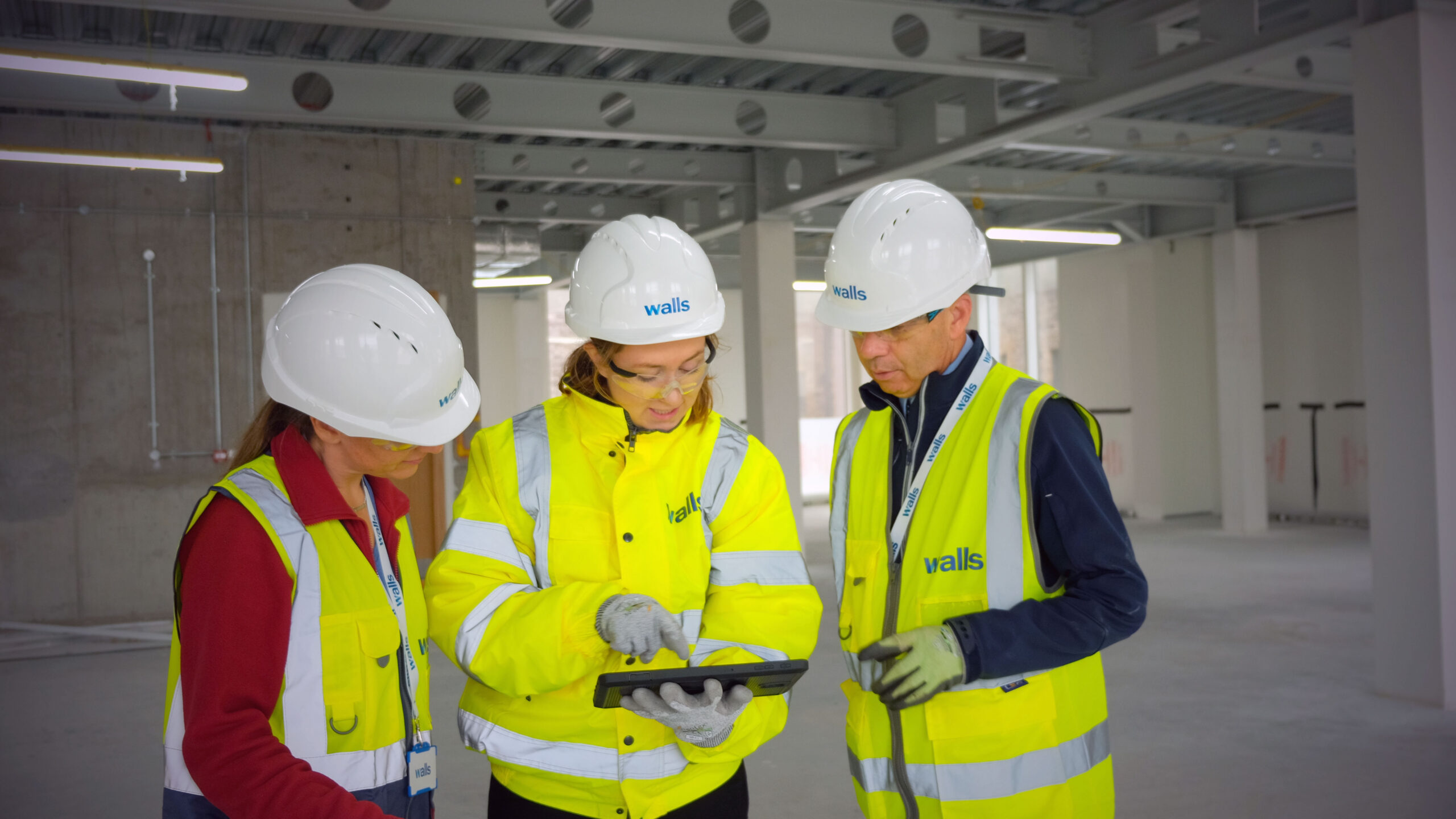
At Walls Construction we have embraced this challenge and our dedicated Digital Project Delivery (DPD) department is to the forefront in terms of the application of digital technology throughout the organisation. Its goal is not just to deliver BIM on projects but also to provide efficiency, added value and certainty though the use of the latest digital tools for our clients.
Our digital journey
Having recognised both the potential and certainty of digital technology in construction, in 2020 Walls established a dedicated inhouse BIM and Digital Project Delivery team to embed digital construction and innovation in its day-to-day operations.
Today this department manages the full BIM lifecycle on a project, from tendering and design coordination through to construction, handover and closeout.
To ensure the highest standards in relation to the delivery of BIM and digital tools we are independently certified by NSAI to ISO19650 which is the international standard for information management using BIM. This certification demonstrates compliance and leadership in structured, data driven delivery, and to maintain this certification we conduct regular internal audits and are subject to an annual audit from NSAI.
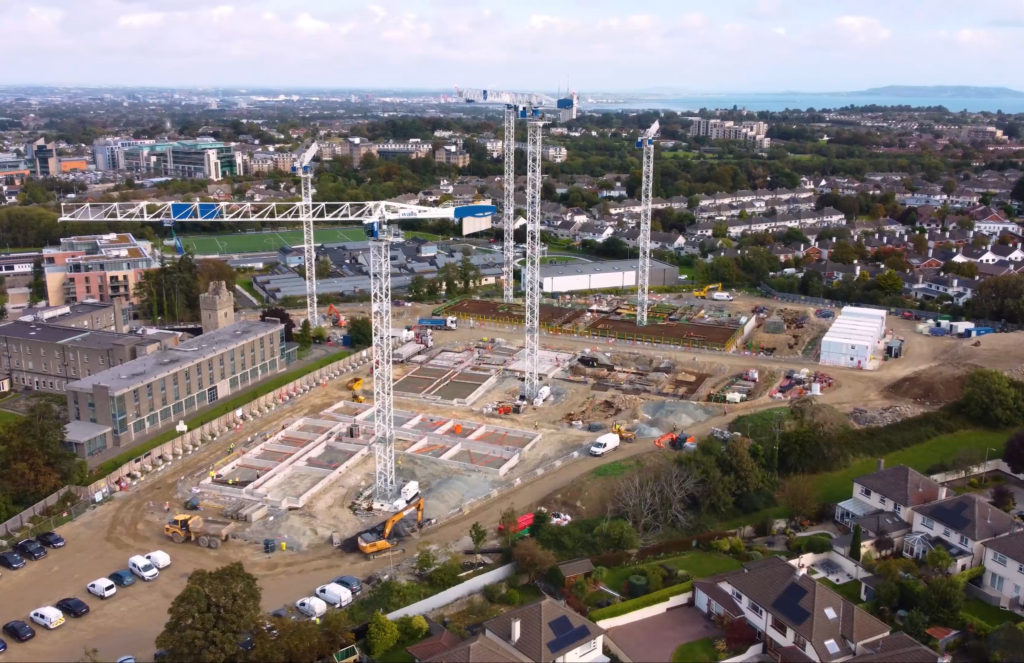
Walls Construction’s Marmalade Lane Project
Where we are today
Our Digital Project Delivery department manages more than just the 3D models; it is also involved in the rollout of new technology along with our site personnel that creates a ‘data drives decisions’ ecosystem. We do this through various procedures and workflows:
Building Information Modelling (BIM)
BIM is at the core of our approach to many complex projects and enables us to create, review and interrogate intelligent 3D models. These reviews can be by way of clash detection and constructability reviews to reduce and limit the number of issues on site.
Common Data Environment (CDE)
Our CDE acts as a single source of truth ensuring all stakeholders work from the latest set of information. This transparency also reduces risk on our projects by allowing us to review information faster and make more informed decisions knowing that the latest information is available in one location.
4D planning
Using the BIM models from the project and linking them to activities within the programme, we create time-based simulations to enable our site team, subcontractors and clients visualise the construction sequence identifying bottlenecks and optimise logistics before work commences on site.
Virtual and Augmented Reality (VR/AR)
Along with the traditional method of model reviews, by walking though the model to identify coordination and construction issues, we use immersive technologies to conduct further model reviews such as VR model walk though. This is where multiple team members have access to a VR headset and step into a virtual world conducting mark ups and assigning issues to get resolved. On site, we also use AR tools where we overlay the BIM models with the physical elements on site to ensure accuracy of the install compared to the 3D model.
360 image captures
Across our projects we regularly capture 360 images as a form of visual record while additionally we can use the 360 images as a method of tracking progress and recording for quality assurance.
Digital dashboards
As our teams must have access to timely, relevant information on our projects, to achieve this we have created a variety of dashboards that track key metrics giving the project teams instant visibility of performance through all aspects of their projects. These key metrics and associated data are not just a vision; they are a reality on our projects and deliver measurable benefits. For example, early clash detection though BIM has saved weeks on programme schedules while VR walkthroughs have enhanced client engagement and reduced costly design changes.
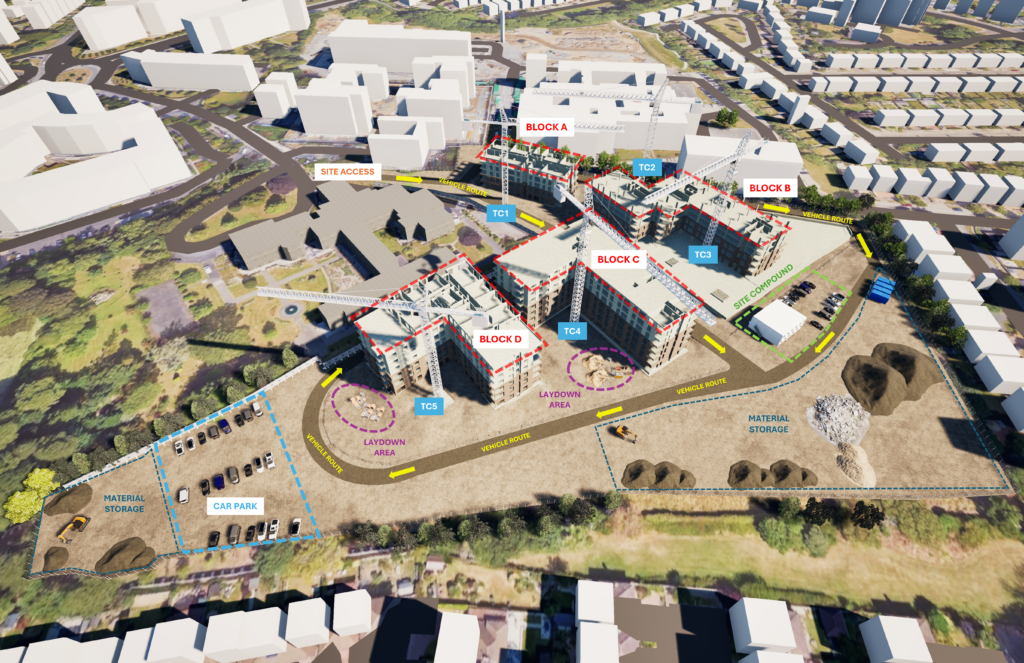
4D progress visual of the Marmalade Lane project
Impact on clients and projects
In Walls, our approach to construction has always been rooted in building strong relationships, flexibility, and delivering value-driven solutions. We pride ourselves on our ability to consistently meet commitments, exceed client expectations, and foster enduring partnerships, and our transformation to a digital approach is proving invaluable across a diverse portfolio of projects including:
- Commercial Offices
- Data Centres
- Education
- Healthcare
- Large-Scale Residential Developments
- Leisure & Sports
- Life Sciences & Pharmaceuticals
What does it mean for our projects and clients?
Reduced risk: By identifying issues early, we avoid costly surprises during construction.
Improved coordination: Integrated models ensure architects, engineers and all contractors work in harmony from one authentic source.
Cost and programme certainty: Accurate data supports reliable forecasting and efficient delivery.
Enhanced sustainability: Digital tools help us optimise material use and reduce waste along with tracking our carbon performance across projects.
On several recent projects we have demonstrated the power of a digital delivery, where through 4D simulations and BIM driven coordination, we were able to produce storyboards to clients and subcontractors of the sequence of works, which reduced risk and provide cost certainty to the scope of work.
People and skills: Building a digital culture
We appreciate that technology is only as effective as the people who use it and therefore, we have invested heavily in training and development to facilitate the upskilling of employees. When a new process or software is being evaluated, we also review how the implementation and training will be rolled out and set up various workshops with the relevant stakeholders. These training programmes ensure that the digital tools are embedded into everyday workflows and not treated as add-ons. This cultural shift is critical to unlocking the full potential of digital construction.
Looking ahead: The future of digital construction
Emerging technologies such as machine learning, artificial intelligence and advanced data analytics will further transform how we design, build and operate assets. At Walls Construction we are committed to staying ahead of the curve and continuously exploring new digital tools, redefining processes and sharing knowledge though the business. Our vision is clear: to be a leader in digital construction, delivering smarter, safer and more sustainable projects for our clients.
For more scan the QR below: