
Michael Prenty, Director of Residential Operations, Ballymore Group and chairman of the Irish Home Builders Association talks to CIF’s Construction magazine about infrastructure, planning and the road to 2028
Twelve months ago, the conversation around housing delivery centred on national ambition. Had government fully grasped the scale of the challenge? Would the right structures be put in place?
Director of Residential Operations at Ballymore and Irish Home Builders Association (IHBA) chairman Michael Prenty offers a measured assessment.
“In a word, encouraged,” he says, reflecting on the past year. That encouragement is rooted in the work of Minister for Housing, Local Government and Heritage James Browne and the establishment of the Housing Activation Office.
For Michael, the key shift has been structural. “There’s now a thread running through the system,” he says. “From the Housing Activation Office down to the infrastructure coordination units in the local authorities. That coordination simply wasn’t there before.”
For contractors and developers on the ground, that alignment matters. Infrastructure delivery and housing output are inseparable. But Michael is quick to stress that the easier wins have already been taken.
“The low hanging fruit is gone,” he says. Output surprised on the upside last year, reaching 36,000 units when many had expected low 30,000s. This year
could push into the high 30,000s.
“We’ll probably be similar or a little higher again,” he says. “But that’s still miles short of what’s needed.” More importantly, he believes the industry may be approaching a ceiling under current conditions.
“The real worry is 2027 and 2028,” he says. “Without serious provision of infrastructure, we’ll struggle to maintain the numbers we’re at.”
Across roads, water, sewerage and public transport, deficiencies remain. “Everywhere you look, there’s a shortage,” Michael says. “If the infrastructure isn’t there, the houses simply can’t follow.”
In the short term, he argues, the industry must maximise sites where services are already in place. That requires decisive action at local authority level, particularly around zoning. “Some local authorities have been slow to act,” he says. “And in some cases, they’re not zoning the land that can be brought forward for planning straight away.”
In some local authority areas, he estimates that only around 20 per cent of zoned land is immediately serviceable. “Now is the time to be bringing forward planning for 2027 and 2028,” he says. “If we don’t, there will be a gap.”

Aerial view of green fields and motorway, England, UK
Michael believes part of the issue is a lack of ambition at local level.
“They’re wedded to caps and restrictive interpretations of the National Planning Framework,” he says. “They’re not being ambitious enough.” That caution has real-world consequences. “In parts of the Greater Dublin Area, you have people in their late 20s and 30s still living at home because they can’t afford to buy,” he says. “And yet we’re being restrictive.”
Recent legislative changes allowing development plans to be extended by two years add another layer of complexity. While extensions provide administrative breathing room, they risk leaving some areas without up-to-date local area plans.
That uncertainty can expose projects to appeal risk and potential refusal.
“You run the risk that if a planning application is appealed, it could be refused because there isn’t a current development plan,” Michael says. “That just adds to the problem.”
For the industry, the message is clear. If a supply gap is emerging, more serviced land must be zoned now. “You have to bridge the gap,” Michael says. “That means zoning more land that can be activated immediately.”
Apartments present a parallel challenge. Supports such as VAT adjustments and Croí Cónaithe have helped viability in certain locations. He believes investor confidence must form part of the solution.
“We need to encourage investors back into the rental market,” he says. “Institutional capital has a role to play in delivering apartments at scale.”
Updated apartment guidelines are expected to provide additional clarity, but delays are creating uncertainty.
“Timelines matter,” Michael says. “When guidance is delayed, decisions get delayed.”
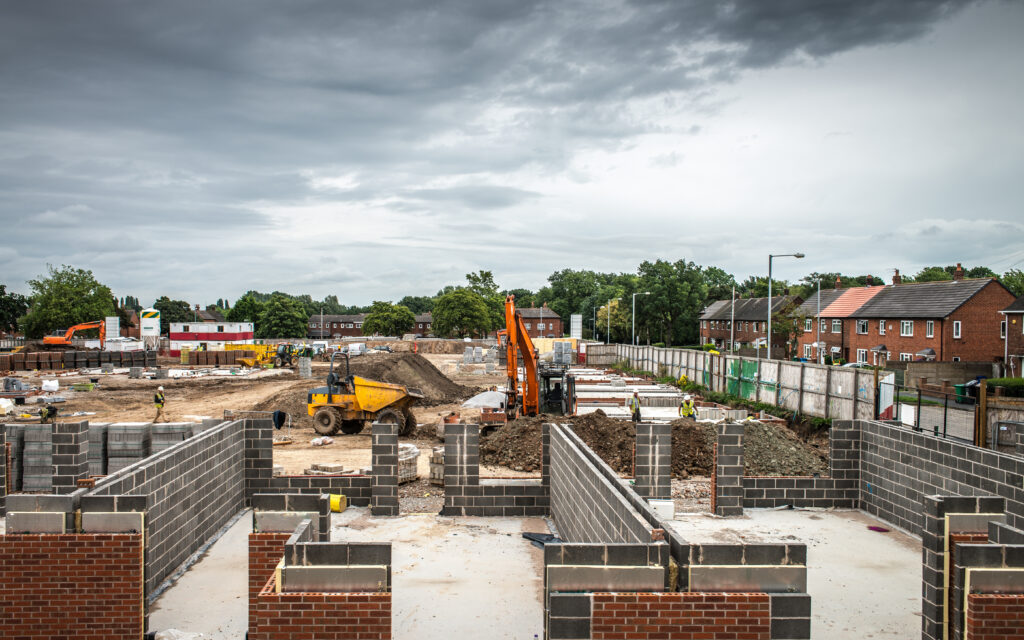
Planning remains the most immediate bottleneck. A large-scale residential development can take close to a year to reach lodgement stage. Once submitted, statutory decision periods, further information requests and appeals extend the timeline further. The possibility of judicial review adds additional risk.
“You’re talking about 11 or 12 months before you even lodge,” Michael says. “Then at least 16 weeks for a decision. If there’s further information or an appeal, you’re adding months again.”
Even at current output levels, he believes the system is under strain. “There were around 16,000 commencements last year,” he says. “If we were up at 50,000 units, the system simply isn’t resourced to handle it.”
Michael sees workforce capacity as part of the issue. The pathway to becoming a qualified planner is long and rigorous. In the meantime, he argues, resources need to be better allocated.
“Smaller applications such as domestic extensions or utility substations could be dealt with under a different process,” he suggests. “That would free up planners to focus on large housing schemes.”
For Michael, the priorities are now sharply defined. “First, local authorities need to act faster on zoning serviced land,” he says. “Second, we need to resource and streamline the planning system so that land can move quickly to delivery.”
National ambition, he believes, is largely in place. The next phase is execution. “If we don’t act now for 2027 and 2028, we’ll feel the consequences then.”